What is ThoughtDrama?
What Do We Mean by ThoughtDrama?
A ThoughtDrama is a hyperbolic, didactic form of cinematic writing—sometimes a psychotic outpouring masquerading as a lecture. These films are philosophical in subject, but they are staged as drama. Ideas are not treated as simple abstractions; they are expressed as emotional states, psychological conditions, and theatrical incidents. ThoughtDrama is where thinking becomes performance.
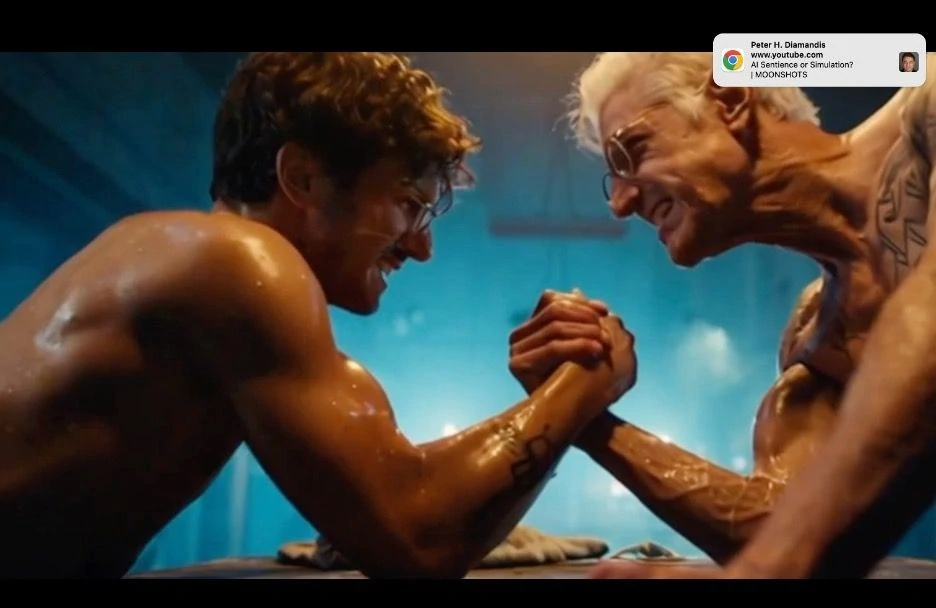
The earlier works began as slide-supported, emotionally charged philosophical talks we called the “PowerPoint cycle," built from borrowed or found footage. With the arrival of AI image synthesis, the form has shifted into something more fully cinematic.
The borrowed images have been replaced by fabricated ones. Speaking characters are now invented from whole cloth. The lecturer ("me") is no longer confined to a desk. We can place ourselves inside imagined, surreal, and impossible landscapes.
In short: ThoughtDrama "PowerPoint" has become cinema. We now synthesize the visuals we once had to steal!
ThoughtDrama "Dogma"
In the spirit of Lars von Trier and Thomas Vinterberg’s “Dogme movement,” I’ve defined a set of dogma, not hard and fast rules, but certain constraints that define the spirit of ThoughtDrama.
At bottom, ThoughtDrama, today at least, relies on synthetic constructions of scene and characters.
• Controlled by a single narrator, me; all other “performers” are synthetic, • All synthetic characters are driven by my voice and movement.• When other characters appear, they are often paraphrased; they are projections of the narrator rather than actual people.• All voices are cloned including my own.• Any image or trope must be alluded to multiple times to justify inclusion.• While the audience is a presence, it is nonetheless an abstraction, not real. • An emphasis on quoted texts, lost letters, controvertial translations, journal entries.• Explicit anxiety about holding audience attention• Excessive use of headlines to underline thoughts• More dogma to come…
At bottom, ThoughtDrama, today at least, relies on synthetic constructions of scene and characters.
• Controlled by a single narrator, me; all other “performers” are synthetic, • All synthetic characters are driven by my voice and movement.• When other characters appear, they are often paraphrased; they are projections of the narrator rather than actual people.• All voices are cloned including my own.• Any image or trope must be alluded to multiple times to justify inclusion.• While the audience is a presence, it is nonetheless an abstraction, not real. • An emphasis on quoted texts, lost letters, controvertial translations, journal entries.• Explicit anxiety about holding audience attention• Excessive use of headlines to underline thoughts• More dogma to come…